The Newspaper Guild
Search


The Guild Reporter


War changes everything — even at the Times

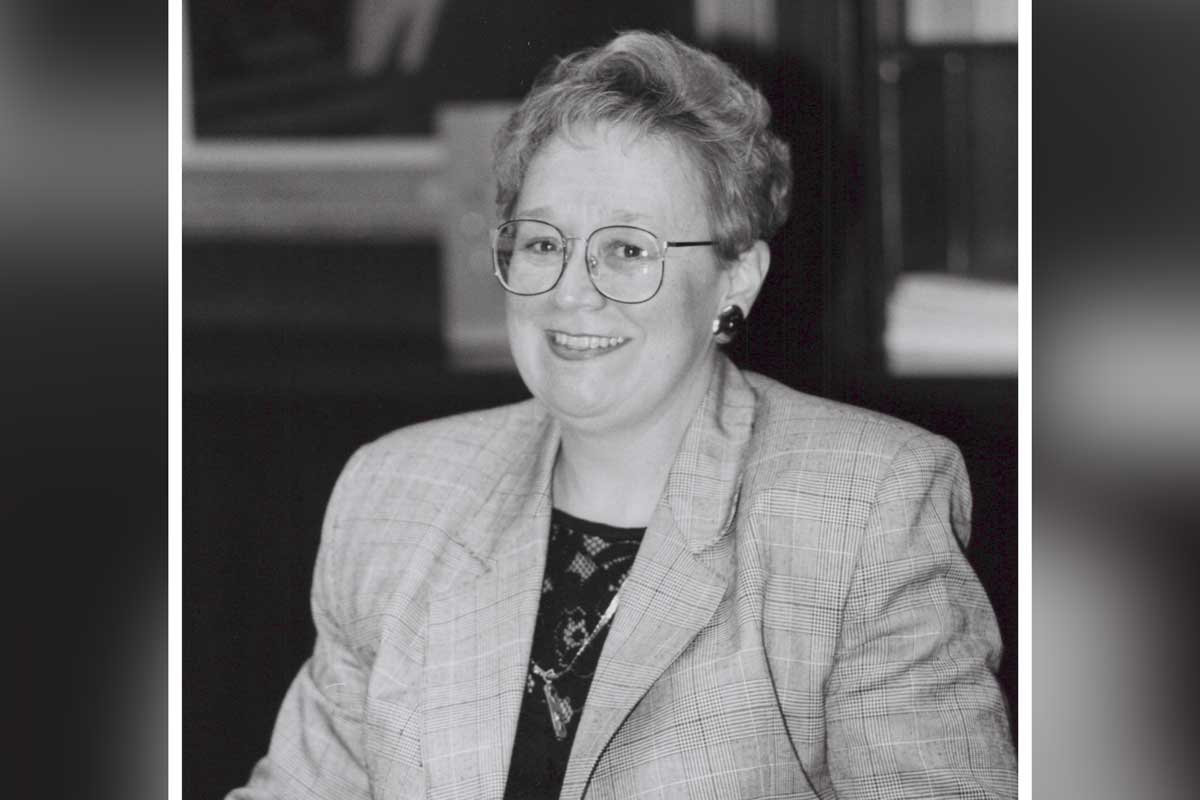
Susan Ingraham, New York Guild (ret.)

The Guild Reporter

[It’s hardly unusual to see women in U.S. newsrooms these days, but it wasn’t always that way. The great emancipator was World War II, which quickly drained the men out of American newsrooms and gave women an opportunity to work at something other than clerking or teaching. The path wasn’t easy. As the following memoir makes clear, those early pioneers not only had to contend with sexism but were handicapped by their own social conditioning and subservient self-images.

Moreover, while the Guild comes off well in this piece, it’s worth noting that by today’s standards it was relatively chauvinistic, too. Attractive women in bathing suits cropped up in the Guild Reporter’s pages with some frequency, and as the cartoon below underscores, the feminization of the newsroom was regarded with a nostalgic sense of loss.

Nearly seven decades later, it’s newsrooms themselves that are an endangered species.]

I worked at the New York Times during World War II, in a large room on the fifth floor, in the college and school service department. Pat Reynolds was our boss and Mary McCarthy was his secretary, but the Big Boss was Mr. Schleigh. Mr Schleigh was the circulation manager and headed up a huge office of underlings in a larger room across the hall. He had a secretary, rumored to be his lover, who screamed at the top of her lungs at us no matter what the request or need. Still, we were glad to have a “cushy” job while we waited for the war to end and the boys to come marching home—to take our jobs and, hopefully, marry us.

Guild women were not immune from the kind of arch behavior society expected of them, as suggested by this picture from a 1941 Guild Reporter accompanying a story about a National Labor Relations Board election at the New York Times. (The election pitted the Guild against a sham AFL local, but that's another story.) Pictured (l to r) are Tess Kaufman, John McCavley and Gene Crystal.

Every Friday afternoon we made out our expense accounts and handed them to Pat Reynolds, who took them in to Mr. Schleigh’s office to sign. One day my expense account was handed back to me and I was told to carry it to Mr. Schleigh’s office myself to get it signed, and so I did, a lamb strolling into the lion’s den.

“You want me to sign this?” he asked, looking it over as if he had never seen one before. “Perhaps you don’t need these expenses repaid” he continued, as he checked down the charges.

(We women were notorious for not padding our expense accounts sufficiently, failing to follow the example set by the men who preceded us. One of my workmates pointed out that the expense account was a way of giving us a raise without committing the Times to larger salaries. She was probably right, as newspaper people were famous for being underpaid. An old joke of the time went: “Don’t tell my mother I work for The New York Times . . . she thinks I play piano in a whorehouse!”)

“Yes,” I answered, “I need you to sign my expense account if you want me to stay fat!” And I giggled, squirmed and twisted in my discomfort in what might have seemed a “come-on” gesture to Mr. Schleigh. He looked up at me and said, “Unbutton your jacket!”

I was wearing a black skirt and jacket with a blouse under the jacket, proper attire for an office worker in those days. I realized I had invited this type of intimacy or intimidation–for it was intimidating!—so I’m sure my face showed surprise and confusion. I wasn’t afraid, but I was indeed intimidated. I took a deep breath and unbuttoned my jacket. “Very nice!” he said, signing and handing the expense account back to me.

I left the office without a word, walked past the rows of desks in the circulation department, across the hall and back to my desk. I sat down and tried to sort out my thoughts and actions.

I was a member of the Newspaper Guild, among whose leaders was a former newspaperman who had tangled with Mr. Schleigh and perhaps lost his job as a result. He was the man who had become my Guild mentor, meeting me at the bar that first day when I stopped in to enjoy my free beer and telling me, then and there, that if I ever had any problems at the Times I should come straight to the Guild and they’d go to bat for me. Should I call him now and ask for assistance?

The whole room was carefully looking the other way as I sat at my desk for a few moments, until I finally walked over to a telephone and called the union. My mentor answered, and as I told him that Mr. Schleigh had asked me to unbutton my jacket before he’d sign my expense account, he grew elated.

“Do you want to press charges?” he asked. “We will take up your case!”

I had a “case.” For heaven’s sake, what had I gotten into? I told my mentor that I had invited the insult with my kittenish remark about getting fat. (Back then, before processed foods had been invented, “fat” was good—although as a 5’3” 23-year-old I weighed in at only 110 pounds.)

More discussion ensued, much of it from my home telephone, as I worked to convince the Guild we shouldn’t drag Mr. Schleigh into court. We were at war with Nazi Germany and Japan, after all, and civil rights were on hold for the duration. But I did thank the union for standing behind me, and felt assured that if Schleigh tried to fire me he’d have a fight on his hands. And the exchange prompted me to convince my office mates to join the union, too.

Once schools closed for the summer and we had no “road work” to do, Mr. Schleigh’s secretary found other work for us to do in the office. One day she called me in to Mr. Schleigh’s office and told me, in her loud, screaming voice, to carry a huge ledger into my office and work on it. I did as told, then carried the book back to the circulation office and asked one of the clerks where it should be placed. Just as he started to tell me, the secretary erupted from her office to scream, “What are you doing?”

The influx of women onto newspaper payrolls during World War II, when the men were off fighting Hitler and Tojo, was not always well received, as reflected in this cartoon that ran in the August 15, 1942 issue of the Guild Reporter.

I waited a beat, and then at the top of my voice screamed, “I’m returning the ledger!”

“You have to finish it!” she screamed back.

“I did finish it!” I responded.

She looked at the ledger. It was complete. And then I just looked at her for a full minute, while the circulation department staff looked on. I wanted to maintain my victorious position, and considered yelling something more, such as, “Do you have anything else to say?” But wisdom prevailed and I simply stood there, calmly looking at her as she unruffled her feathers and tried to think of what to do next. There was a “pregnant pause,” as they say in the whodunits. Then she turned and walked back to the boss’s cage at the far end of the room. Without looking at any of the circulation drones, even to share a victory smile, I walked out of the office, across the hall and back to my own desk. Home base.

I learned that day that the real way management controlled women in the workplace was to hire other woman to do their dirty work. The same thing goes on today, I’m sure. My office did unionize, and I became shop steward—I just can’t remember whether that happened before the screaming confrontation or after. I like to think that it was after.

The union makes us strong.

[Have a Guild-related reminiscence you’re willing to share, from last year or from decades ago? We’d love to see it! Please send written submissions and photographs to azipser@cwa-union.org.]


            e-mail or print this story

The Newspaper Guild
Communications Workers
of America
AFL-CIO, CLC and IFJ

501 3rd. Street N.W.
Washington, D.C.
20001-2797