|
MDC: Talk the talk, but also chalk the walk
Martha Waggoner, News Media Guild
01 Dec 2009
The Guild Reporter
 |
 |
| Matt Olson of Kenosha examines his sidewalk sloganeering, at left. |
Jennifer Towery, president of the Peoria local, asserts her loyalties. |
Leaders of locals within The Newspaper Guild know their work—mostly uncompensated and squeezed in between full-time jobs and family obligations—is a labor of love. But some go above and beyond what anyone expects.
Take Jerry Mennenga, president of the TNG-CWA local in Sioux City, Iowa’s western-most city. In November he drove nine hours each way—and planned to pay all his expenses—just so he could participate in the Midwest District Council meeting in St. Louis.
“Since this was ‘relatively’ close and I was able to get some time, I decided to drive to meet members of other locals that are nearby,” said Mennenga, a photographer at the Sioux City Journal. “The training agenda was dealing with organizing, and that’s something we as a small local need to learn more about and improve.”
Mennenga, president of his local for about three years, represents approximately 40 employees in the Journal’s editorial, circulation and janitorial departments. Although he made it to the Saturday session, he had to skip Sunday—when participants gave their local reports—to make the long trek home. Participants voted to reimburse him $500 from district council funds.
“The training was very good on Saturday, and I got to meet some people I hope to confer with down the road, if nothing more than to pick their brains since they have been at this longer than I,” he said.
Mennenga was one of several new faces at a Guild meeting. Others included Sari Gelzer from Truthout, a nonprofit, subscriber-supported online news website; Amy Talbott Kamp, Sharon Harris and Melida Heien from the Pekin Daily Times in Illinois; Patti Kuehl from The Sheboygan Press, in Wisconsin; and Kathy Rynearson from the Peoria Journal Star in Illinois.
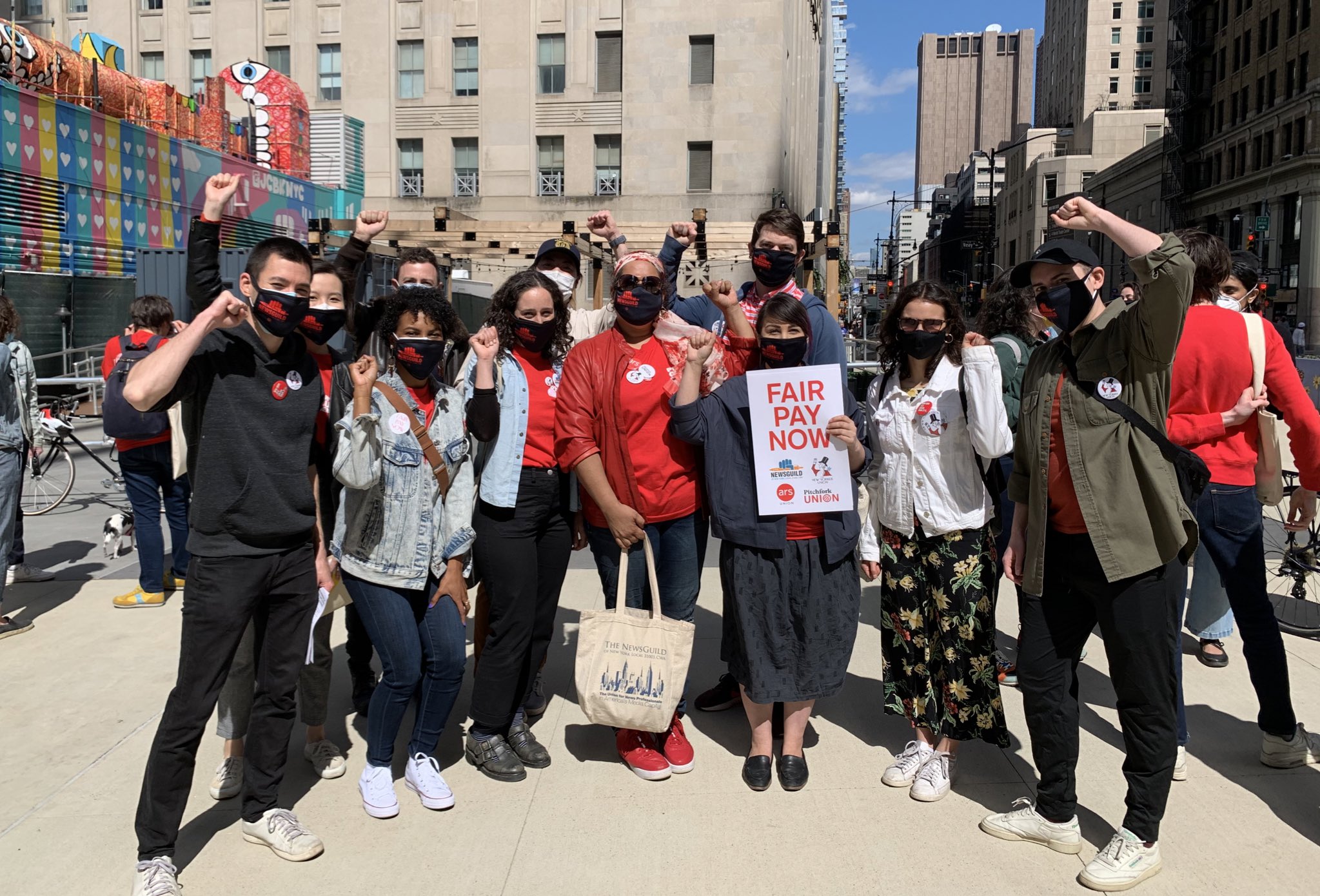
All had a chance to participate in a job action at the St. Louis Post-Dispatch, where members are bargaining a new contract. Armed with chalk, they wrote supportive statements on the sidewalk in front of the newspaper that apparently got management’s attention. As one Post-Dispatch employee wrote on Facebook: “Arrived this morning, just in time to catch the maintenance guys scrubbing the chalk messages off the Jersey barriers and sidewalks, overseen by a very un-amused HR manager. If she was pissed, I was happy.”
Shannon Duffy, business representative for the St. Louis local, said Post-Dispatch managers watched videos of the “chalk the walk” to see if they could identify any staffers, but the cameras are pointed mostly toward the parking lot and so were of little use. Meanwhile, an outside contractor’s security guard at the newspaper that day was reassigned, apparently for failing to intercede in the chalking.
Included in the training was a much-abbreviated—and toned-down—version of the 2.5-day sessions that Jobs with Justice usually conducts. In a four-hour afternoon stretch, the MDC attendees participated in shortened versions of one-on-ones— “intentional conversations” in which people get to know about what makes each other tick—and learned how to identify issues suitable for mobilizing/organizing actions.
While several participants said the intensive, in-your-face training wasn’t their cup of tea, others said they learned from it and would like to have the chance to participate in the full JwJ training.
“The Jobs with Justice training was a chance to focus on organizing techniques which could be useful within a unit or in a larger context,” said Gelzer, unit chair of the 15-member Truthout local. “In discussing organizing, we focused on the idea that each person has a set of personal experiences and values that makes them tick. This isn’t always expressed on the surface, but can be unearthed through meaningful one-on-one discussions. This simple yet often overlooked process seems like it could really improve the glue that binds a union.”
TNG-CWA President Bernie Lunzer opened the meeting by describing the Guild’s efforts to save not just unions, but also journalism. “We’re actually trying to tell owners how to run their businesses” because union members have realized that the owners themselves either don’t know how to do that or don’t care, he said. “The future of journalism is really up to us.”
The Guild, Lunzer said, is focusing on retaining journalistic standards. “We have to become the advocate for people interested in quality journalism,” he said, adding that the Guild must find a way to reach out to people, such as freelancers, who don’t have a traditional employment relationship.
|